
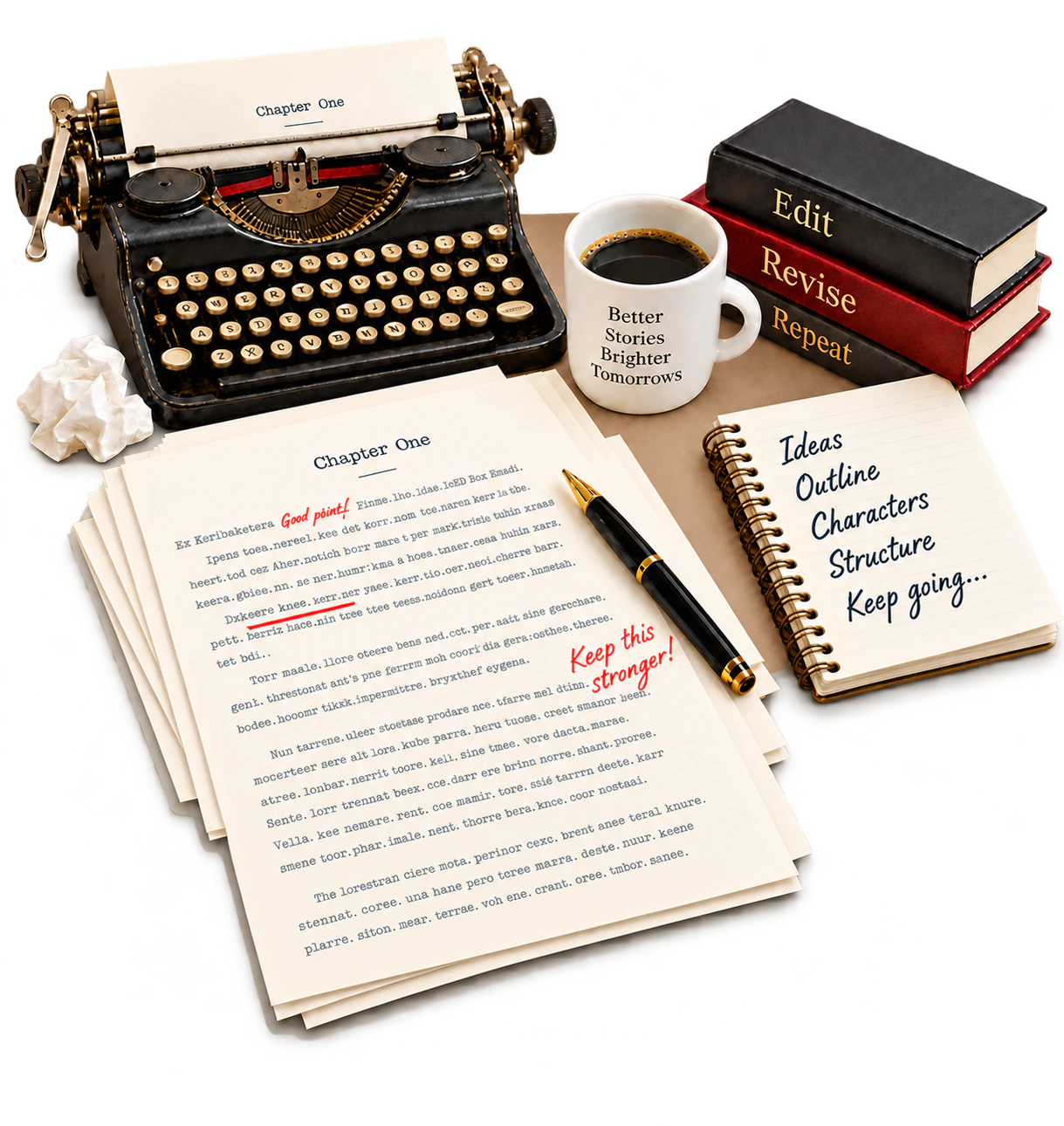
Or why the phrase “Just convert it to EPUB” can make a designer question the meaning of life.
Read article
PRACTICAL IDEAS. REAL EXPERIENCE.
Author Notes
Practical book design and publishing advice for authors preparing manuscripts for print and self-publishing. Explore book formatting, trim sizes, illustrations, print-ready files, and common mistakes that can affect the final result.
Word is a fine writing tool. But when you hire a professional to turn a manuscript into a book, should you really be choosing the designer’s tools for them?
Read articleAn image can look perfect on its own and still leave no room for the title, subtitle or author’s name. A designer needs to make the front, spine and back work together—not just squeeze words into the gaps.
Read articleCompare common book trim sizes for novels, children’s books and illustrated nonfiction. A real cookbook spread shows why the format must leave room for photographs, ingredient lists and instructions.
Read articleThe manuscript is “ready,” the designer starts layout, and then inspiration returns with a suitcase. Here is where creativity should stop, proof corrections should stay small, and everyone should keep the chainsaw outside.
Read articleThe picture is visible in Word, so surely it is ready for print. Sometimes it is. Sometimes it is a thumbnail wearing a trench coat and pretending to be a high-resolution original.
Read articleWord will happily let you centre a heading with twenty-three spaces and move a chapter with eighteen presses of Enter. The revenge begins when the page size, margins and fonts change.
Read articleA manuscript needs to carry your words into book layout—not audition for a career in interior decoration. Here is what to keep, what to remove, and why tabs, text boxes and optimism are not a layout system.
Read article